
How to Find a Work from Anywhere Job with Portugal’s D2 Visa
Our experience landing a remote job while moving to Europe, plus honest tips for your own international job search.
FEATURED
5/19/20264 min read
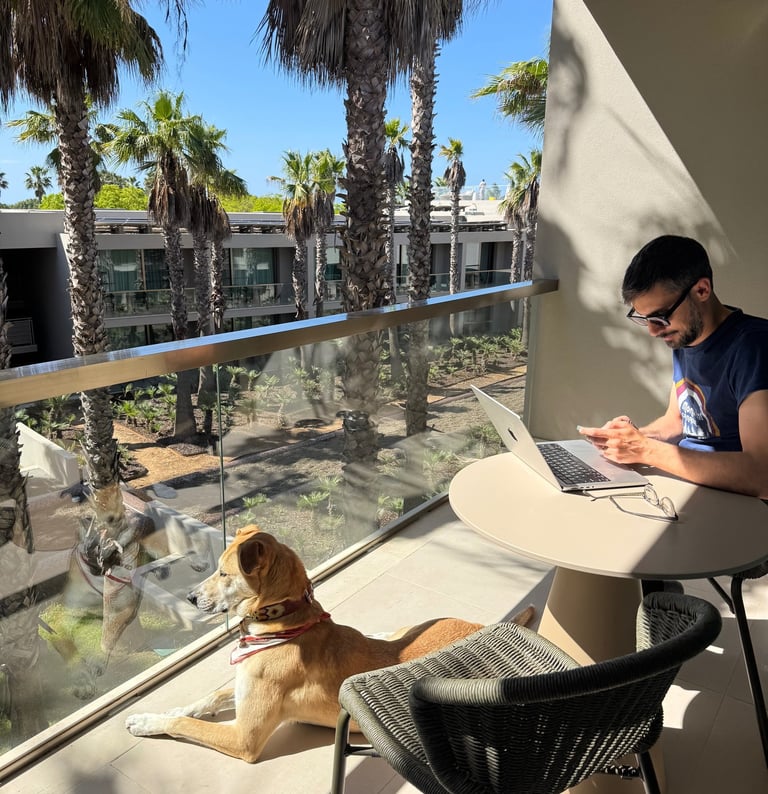
Going full speed ahead into a business in a new country without an income can feel risky. What if your business doesn’t generate revenue right away? And how are you supposed to invest in growth if you don’t have funds coming in? One of the things that attracted us most to Portugal’s D2 Visa is its flexibility. You're allowed to work for a Portuguese or an international company while you get your business established, which made the leap feel a lot more realistic for us. Having that employment also helps demonstrate the sustainable income the D2 requires.
We’ve now had experience with both routes. Before we moved, John William received a job offer from the Portuguese office of a U.S. company. Legally, he was eligible to work for them once we received our visa. But due to the company’s own policies, they would only move forward with the official offer after we established residency. In an ideal world, this should happen within the four month visa period. With AIMA wait times, though, it can take significantly longer. After that disappointment, we shifted our focus to applying only to work from anywhere companies. If you are still figuring out whether the D2 is the right visa for your situation, we shared our path to it.
After a couple months of searching, John William was fortunate to land a contractor position at a U.S.-based company that allows people to work remotely from anywhere.
Finding a true work from anywhere job can be difficult, especially in a tough job market, but it’s possible. Here are the steps that helped guide us:
We branched out from traditional job boards, too. Sometimes smaller organizations or mission-driven companies (like those on Idealist) are more flexible with location. What worked for us was searching for remote only roles on Wellfound. When we found one that felt right, we went all in. We looked for anyone at the company on LinkedIn to increase our chances. Our only connection was someone who attended UT. With over 50,000 students enrolled per year, it’s a common link, but we took our shot and reached out anyway. As luck would have it, our connection turned out to be the hiring manager for the role.
We knew the number of jobs available to us was much smaller than if we had stayed in the US, so John William poured everything into the interview process. He sent thank you notes after each interview, a small but meaningful detail. The interviews stretched across our move, so by the time he landed the job, our lives looked quite different. The role was a 1099 contractor position, which works well with the D2 Visa. The pay was lower than John William’s previous salary, but the tradeoff of being able to work from Portugal, combined with the lower cost of living, was worth it for us. We’ll share more on the cost of living differences in a future post, but these days we spend about 50% less than we did in Austin, Texas.
Of course, working as a 1099 contractor means fewer benefits, and it meant learning to handle our own payroll taxes, health insurance, and quarterly estimated tax payments. If you want to compare for yourself, here is a helpful W2 to 1099 calculator.
Once the new role began, John William had to adjust to being in a different time zone than most of his US-based team. That might sound easy, but it does take getting used to, and it can sometimes feel isolating. We’ve always been morning people who liked to get work done early. Now, we spend mornings on our business and Portuguese bureaucracy, enjoy a quiet stretch of time before the US wakes up, and sometimes work later into the evening as needed.
A job is one of the main things that holds people back from moving abroad, and that is completely understandable. But if living abroad is important to you, as it was to us, we truly believe you can find a job, build a business, or even do both. Our true belief is that we only get one life to live, and chasing the “perfect” job or salary is less important than building a life you love, in a place that feels right for you.
How We Landed a Work from Anywhere Job: Step-by-Step
Define your priorities.
We thought about what we needed most in a job: salary, flexibility, and time zones that fit our new life abroad.
Target the right job boards.
We focused on remote-specific job sites like Wellfound (formerly AngelList), We Work Remotely, Remote Rocketship, and Idealist.
Set search filters.
We made sure to use the “remote” or “work from anywhere” filters to avoid wasting time on jobs that weren’t truly location independent.
Network intentionally.
We searched for connections on LinkedIn and within alumni groups. Even a small connection can open a door.
Tailor each application.
We personalized every resume and cover letter, highlighting experience relevant to remote work and international collaboration.
Prepare for unique interview challenges.
We got comfortable with time zone math, video calls, and sometimes lengthy case-based interview processes.
Follow up.
After interviews, John William sent thank you notes. It’s a small gesture, but we’ve found it’s surprisingly rare and often appreciated.
Understand the offer.
Before accepting, we clarified the details about contracting, pay, taxes, and benefits.
Still figuring out the remote work piece of your move? We are happy to talk through it.
A focused 45-minute conversation with two people who've been through it.
Not ready for a call? Send us a question or follow along on Substack.
Follow Along on Our Journey
Stay up to date as our journey unfolds. Real stories and honest reflections from Portugal, delivered to your inbox.
Contact
You don't need to have it all figured out before you reach out. Whether you're deep in the research phase or just starting to dream, we'd love to hear from you.
info@venturealong.com
Connect
Copyright © 2026 Website operated by Ascendro LDA | NIF: PT518973395 | Portugal